




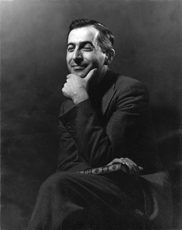
 Poet, critic, philosopher and educator Eli Siegel (1902-1978) grew up in Baltimore, Maryland. In 1925 his poem “Hot Afternoons Have Been in Montana” won the esteemed Nation Poetry Prize. “I say definitely,” William Carlos Williams was to write of it, “that that single poem, out of a thousand others written in the past quarter century, secures our place in the cultural world.”
Eli Siegel taught how crucial it is for people, in order to like themselves, to want to know and respect other people and the world. These lines from “Hot Afternoons Have Been in Montana” stand for the just way of seeing which he had all the time:
The world is waiting to be known; Earth, what it has in it! The past is in it;
All words, feelings, movements, words, bodies, clothes, girls, trees, stones, things of beauty, books, desires are in it; and all are to be known;
Afternoons have to do with the whole world;
And the beauty of mind, feeling knowingly the world!
Beginning in 1941, the year he founded the philosophy Aesthetic Realism, Mr. Siegel gave thousands of lectures and classes on the arts and sciences, as well as individual lessons, in which he explained that: (1) the deepest desire of every person is to like the world on an honest or accurate basis; (2) “the chief reason for liking the world is that the world has the opposites which, as one, we see as beauty itself”; (3) the desire for contempt—”the addition to self through the lessening of something else”—is what most hurts a person, makes one timid, unexpressed, held back, afraid to be deeply affected—and also makes a person unkind, even brutal.
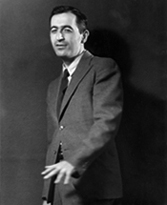
Among Mr. Siegel’s many published works are Self and World: An Explanation of Aesthetic Realism; Hot Afternoons Have Been in Montana: Poems, which was nominated for a National Book Award in 1958 (John Henry Faulk, speaking of the poems in this book, said on CBS radio, “Eli Siegel makes a man glad he’s alive”); James and the Children: A Consideration of Henry James’s Turn of the Screw, and Children’s Guide to Parents and Other Matters.
Some of the many playwrights Mr. Siegel lectured on definitively are Sophocles, Sheridan, Molière, Vanbrugh, Massinger, Ibsen, Strindberg, O’Neill, Susan Glaspell, George Kelly, Congreve, Oscar Wilde, Sean O’Casey, Galsworthy, and Kaufman and Hart.
And Eli Siegel is the critic who understood William Shakespeare—the dramatist, poet, and man. Mr. Siegel cared for Shakespeare early and all his life. At 16, he wrote to his friend Adolphus D. Emmart in Baltimore:
Shakespeare is finished completely now. This I consider to be my best literary performance. From ‘Ho Boatswain’ of The Tempest to the last line of The Phoenix and the Turtle, all has been read. This includes Pericles, Titus Andronicus, and Troilus and Cressida. Did you read Troilus and Cressida, villain? Oh, so many things could be said about Shakespeare.
And Mr. Siegel was to say them!
Throughout the years, he spoke about Shakespeare’s works with a oneness of complete freshness and eternal principle that was his alone. He discussed every one of the 154 sonnets. He lectured on many of the plays, including The Tempest, Julius Caesar, Romeo and Juliet, Twelfth Night, Two Gentlemen of Verona, King Lear, A Midsummer Night’s Dream, The Taming of the Shrew, Othello.
And there is his Shakespeare’s Hamlet: Revisited, in which the reason Hamlet could not avenge his father is understood for the first time. In this critical masterpiece, he discussed every scene of the play in detail and showed its poetic and dramatic power, its meaning for us right now.
To learn more about Eli Siegel, read “Honoring Eli Siegel” from the U.S. Congressional Record.