








Rachel—& True Individuality
by Carrie Wilson
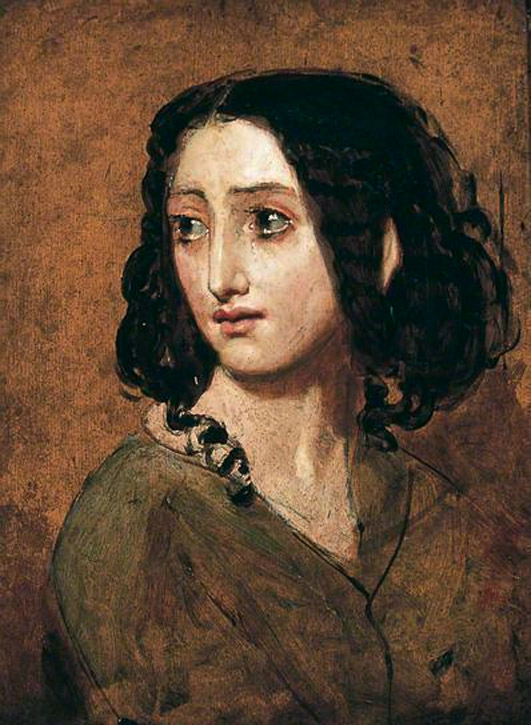
Everyone is hoping for true individuality, and the question is, what is it? In his essay “There Is Individualism,” Eli Siegel, the great poet, critic, and founder of Aesthetic Realism, explains:
True individualism can be described as the affirmation, completing of self through the courageous and just relation of the self with more and more things. The self is both definition and abundance; it is one thing with unending relation.
Tonight I’ll speak of what I’m immeasurably grateful to have learned and to teach other women on this subject, and about what we can learn from the life and art of the great 19th century French actress Rachel. “The courageous and just relation” of herself with the classic heroines in the dramas of Corneille and Racine has given Rachel immortal individuality. Yet another, false idea of individuality weakened her, as it does women now.
1. Individuality and What I Learned About Sameness and Difference
In his essay, Mr. Siegel writes:
We have for ourselves a question in art. This question is: How can I affirm the oneness, or particularity of me, while honoring the desire I have to meet and be accurate with more and more things?
As a child, I had this question very much. I loved to read, to draw, climb trees, and sing. With my friends I would act out scenes from films like The King and I, Hans Christian Anderson, and Robin Hood. But I early came to feel it was how I was different from, and therefore, as I saw it, better than other people that gave me my distinction.
For instance, I’d been praised for my wavy hair. When I was 13, visiting London with my family, I overheard my English aunt remark on the lovely waves in my sister’s hair. I felt a fury rise up in me; I was the one with wavy hair, and my sister was robbing me of my glory! This anger, and the shame I felt for having it, are as vivid in my memory as the Tower of London.
By my early twenties, I saw becoming a noted actress as the way to have my individuality shine. The best thing in me truly loved the attempt to get within the feelings of a character. In acting, I felt more myself through trying to be fair to another person. But I also loved the approval I got and used it to feel I was a uniquely talented future star among people who were mostly boringly ordinary.
In “The Battle of Mind,” published in The Right Of, issue #830, Mr. Siegel describes the battle between respect and contempt that was raging in me:
We do some art work, the purpose of which is to get respect for what is different from ourselves—and then we meet someone, and we work for contempt without knowing it.
Once, while taking part in a college musical, I found a rose in my dressing room, with a note from a young man I had never met. I learned that he played in the orchestra, and graciously allowed him to walk me home. I then proceeded to complain for ten interminable blocks because another girl had been given an extra song to sing—when I was supposed to be the star of the show. I saw the disillusionment and shock on his face, but I couldn’t stop myself. Though I hated myself for the way I was talking, I felt if anybody else got glory, it took away from mine. Had I not studied Aesthetic Realism, I would have been driven by competition and jealously to this very day, never really knowing who I was, or experiencing the joy and self-expression I now have as a teacher of singing and art, and as an Aesthetic Realism consultant, wanting other people to be at their best.
In an Aesthetic Realism lesson, when I was 24, I told Mr. Siegel, “I maintain the myth within myself that I’m special.” He replied, “You’re special. Everyone is special. You don’t think there’s another person just like you, do you?” “No,” I answered. “There’s no harm in that,” he explained. “It’s how you use it.” And he asked, “What do you hope for? What has to be the hope of everybody?”
CW That they’ll be happy and do well.
ES It’s chemical, see. Everything that’s compounded with another hopes that the result will be good for the thing being compounded with another. So, do you believe you hope a compound of world and Carrie is good?
CW Yes. I feel that one of the areas in which I’ve hurt myself most is not seeing how I’m like other people.
ES So, what do you think you would get to if you studied how you are like other people? Suppose a blade of grass were compared to a hundred other blades of grass, what do you think it would get to in awhile?
I guessed, “It would feel larger?” And then Mr. Siegel amazed me by saying, “It would feel different. But in a true way. The self is a constant study in sameness and difference.” And he later explained, “You were suffering like anything because you made everything else too different from you….The problem we all have is how to maintain our individuality and not make difference unfriendly.” I’m very grateful to Mr. Siegel for his tremendous good will in teaching me this, and so much more! Through my study, I came to see that the more I wanted to know and be fair to other things and people, the more my individuality would come forth. This made possible true friendships, and a marriage to composer Edward Green for which I’m very grateful. Being affected by his deep love for and knowledge of music, his wide care for knowledge as such, and thoughtful, encouraging criticism of me makes me more myself each day.
II. Two Kinds of Individuality in a Girl of France
Eliza-Rachel Félix was born in 1821, to Jewish parents, Esther and Jacob Félix, itinerant pedlars. To help provide for the family of seven, Rachel and her sister had to sing in the streets. Rachel acted as she sang, and passers-by were struck by the intensity of this pale, slight girl with her deep voice. When she was nine or ten, “A neighbor,” writes biographer Joanna Richardson, “lent her an…edition of Racine.” Rachel told her mother:
“Now I know what my career is to be: I shall act in tragedy.” The child of the streets bought copies of Racine and Corneille. As she went about…finding food for the family, she contrived to save enough for a cheap [edition of] Moliere.
What was impelling this young girl is described by Eli Siegel in his essay, “Individuality as Aesthetic Sameness and Difference”:
The keenest, most dramatic, least describable thing in an individual is his difference, his permanent separation, his intimate mobile sequestered worldness…. While having this difference,…a self yearns, pines, longs—dramatic verbs!—to be like other things. The self has a lust for multitudinous identification. This difference and sameness in self, Aesthetic Realism maintains, is like the beginning of art.
At the age of eleven, Rachel was discovered and admitted to a dramatic school. She was then taught, writes Richardson:
by the man supremely qualified to judge and encourage her: [the actor] Samson….He criticized her with the severity that teachers always show to favorite pupils; and…took her into the heart of his family.
Rachel, Richardson continues:
rose every morning at six…working with the tenacity which became proverbial…. [She] accepted all the help, considered all the advice of relations and friends…[and] wandered, hour after hour, through the Louvre,..learning her gestures, her bearing,…from the sculpture of ancient times.
Here, we see a self affirming and completing herself through proudly learning from other people and the great art of the past.
In 1838, at the age of 17, Rachel made her debut at the Théâtre-Français, in Corneille’s Horace, and then played Emilie in his Cinna. Writes Richardson, “there had been no actor sufficiently original, sufficiently inspired to keep tragedy alive. It was now a dead art.”
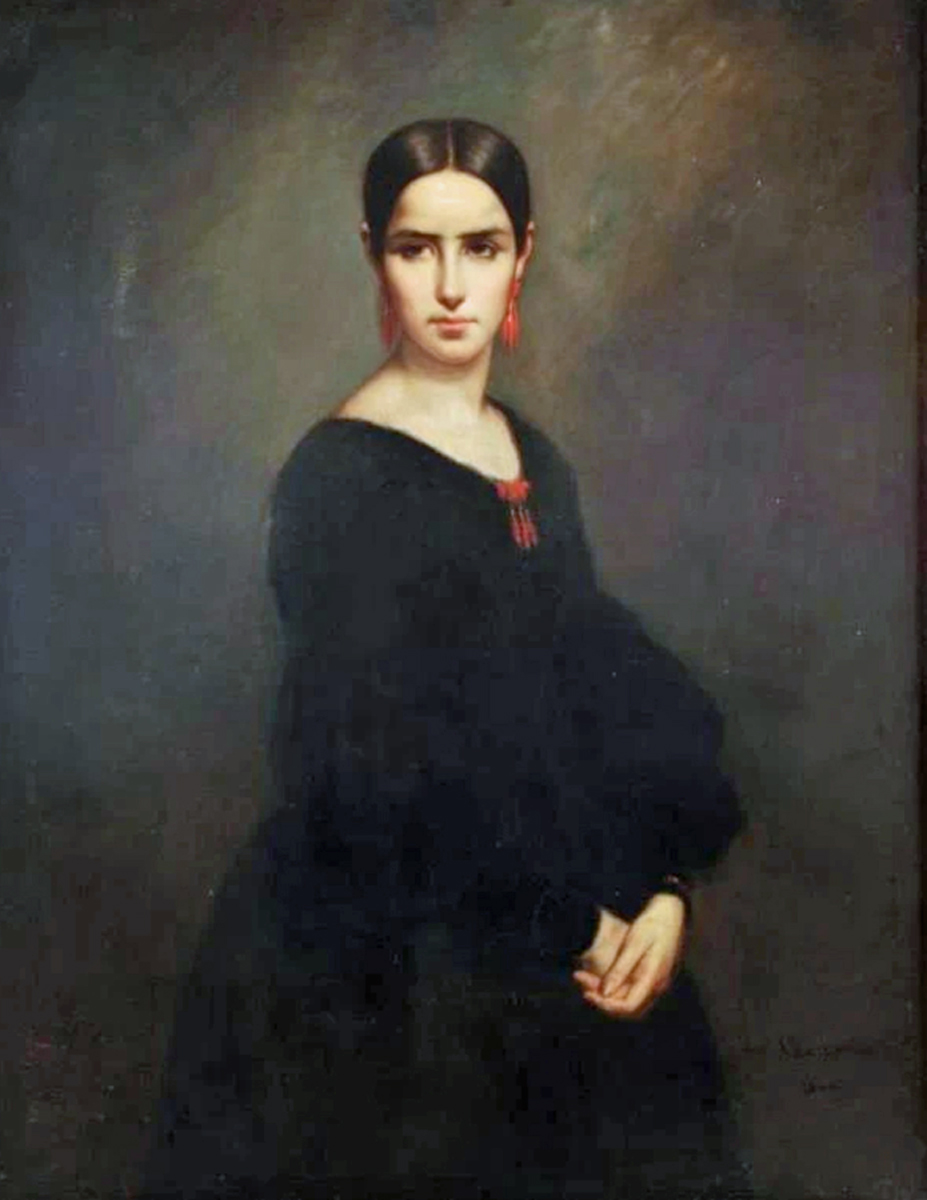
“And then,” writes Théophile Gautier,
suddenly, there appeared a young girl come from no one knew where,…with eyes of flame and a mask of marble, who threw a piece of Greek drapery over her shoulder and began to recite….By her grace, we have seen Hermione again, Andromaque, Emilie, Pauline, all the…noble heroines whom our fathers so admired.
There was a passionate sincerity of feeling in Rachel, accompanied by beautiful planning and control. “I have studied my sobs in the fourth act,” she wrote to Samson. The result is described in these words of George Henry Lewes, quoted by Martha Baird in “Opposites in the Drama”: “Her wail was so piercing and so musical that the whole audience rose in a transport to applaud her.” Ms. Baird comments: “Piercing and musical—what does that mean? It means pain made beautiful. It is Aristotle’s pity and terror, and the audience is transported.”
As people saw Rachel perform they saw the opposites of the world given honest, living form. In his lecture, “How to Be Angry; or, Corneille’s Cinna,” Eli Siegel spoke of Rachel as Emilie in that play:
One of the great moments in theatre was Rachel’s playing of it in Paris in 1838. Rachel was a vibrating repository of good and evil. [The relation of] anger and being pleased got to people …. Emilie is one of the fiercest women in all literature….She is not narrow…she is fierce because an idea of what is right is impelling her.
I believe Rachel felt in the heroines of classic French drama, a resolution of conflicting things within herself—anger and love, courage and despair, passionate feeling expressed with the noble control of rhyming French hexameters. In the art of acting she satisfied what Eli Siegel described in every self—our “lust for multitudinous identification;” through it she found proud, free, joyous individuality.
Yet Rachel also had another notion of individuality. As Mr. Siegel explained: “False individuality is…shown in the desire to have one’s way, truth or no truth.” Fame and power came to her suddenly. She was courted by society, praised everywhere. Her father argued fiercely with the Théâtre for an enormous increase in her salary, which meant less for the other actors. These demands, which she did not oppose, led to a quarrel with Samson. At 18 she wrote, “I have my success, it is true, but not a single friend.”
The young actress soon found that there were wealthy, powerful men who could make her way easier. Writes biographer Francis Gribble: “She was passionately eager to succeed, and it seemed to her that the end justified any means.” Samson wrote, warning her of “These seductive snares held out to your weakness, who would not succumb to them?” He feared for her health as well as her reputation—she had, by the age of 21 the first signs of the tuberculosis which was to claim her life at only 37. She and Samson were reconciled, but she did not heed his criticism.
III. Individuality and Criticism
In his lecture on Corneille’s Cinna, Eli Siegel said:
The drama has always been critical….Aesthetic Realism says the greatest thing everyone wants is criticism….Every dramatist has persons being sure and then bearing the ordeal that they had no right to be that sure. When people are affected by their own criticism or their own conscience, that is a time people become sloppy, because in having misgivings they think they are weak. Maybe they are weak in shooing off the criticism.
Rachel sought criticism of her art with a humility that amazed people. But criticism of her personal life she saw as an affront to her individuality. Women need to learn that criticism is not an insult but a needed and lovely means to becoming more ourselves.
One of the places we need criticism most is in how we see love. We think we’ll affirm our individuality through the power we can have over another person. In TRO #150, titled “What Opposes Love?” Mr. Siegel wrote:
Any love…not used to like the world, that much has contempt in it. When we use a person not to like the world but to make ourselves important or successful, we are having contempt both for the person and for the world. We also, though we may not know it, have contempt for ourselves.
This was so in the life of Katherine Martin, whose life has changed tremendously through her study of Aesthetic Realism. At the time she began consultations, she was a successful and strikingly attractive young business woman, but she was deeply unsure, though she concealed it with a poised exterior. Particularly, she was pained by her relations with men.
We told Ms. Martin: “Each of us, in meeting Aesthetic Realism, met a self in ourselves that never would have come out, and was the self we wanted to have all along.”
We asked, “How would you describe the person you want to be?”
KM Well, I’d like to be honest, more honest than I am now.
C Do you think, then, you’re deceptive?
KM Yes.
C To be the person you want to be, you have to see you are two people. One Katherine Martin feels her importance and individuality will come through respecting the world, and the other thinks she will be powerful through contempt.
Ms. Martin spoke of feeling very bad after a weekend on Fire Island spent with a man who had an impressive resume, but whom she did not respect. We asked, “As you think of yourself as to love, do you look good to yourself?”
KM No, I think I look pathetic, foolish.
C How much company do you think you have? Do you think that just about every woman in America can despise herself for the way she gets pleasure?”
She was surprised. “Yes!” she answered. We explained:
C Eli Siegel taught us that to want pleasure from another person, without respect for him, makes for shame. That’s the reason you can feel so bad in your own company, because the way you have another person in your mind and heart is selfish; there’s contempt. Do you like to deceive men?
KM Yes.
C But that means you aren’t in the mind of another person as your real self—you have to feel lonely and unexpressed.
KM Right.
C Do you think there’s a self in you that is at least as, and really more beautiful than you seem to be on the outside?
KM I hope so.
What Katherine Martin heard is something Rachel Félix wanted to learn. Rachel had many close relations with men. At 20 she became the mistress of Count Walewski, the natural son of Napoléon, who gave her a magnificent house. She bore him a son, but while he was away on a diplomatic mission, she was unfaithful to him. He discovered this, and left her. Rachel, in despair, wrote to a friend:
All the fault is on my side….so that I can find no peace in a clear conscience…but do not pity me. It was all my doing, and God has punished me for it.
Yet in the next sentence she says: “Farewell! Pity me! You can never pity me enough.” “Which do you prefer,” Mr. Siegel asked me once in a class, “Pity or criticism?” I answered, “Pity.” Rachel, like most women, thought she needed pity, but what she really needed was criticism.
It moved me very much to see that the very opposites she was not clear about in her life were one in her art. In his lecture on Cinna, Eli Siegel magnificently described what thrilled audiences as she performed:
While Rachel is assertive she is shaken by doubt. She could present the utmost determination with a sense of the edges of doubt getting into the center.
Yet in her life the way she was determined to assert her individuality caused her deep misgivings which, instead of wanting to understand, she saw as weakness. It was said she “surrounded herself with inferior casts to enhance her own performance.”
She broke permanently with Samson, to whom she owed so much, for teaching another actress as he had taught her, and with the poet Alfred de Musset for writing a play for someone else. I’m sure she felt driven, as I know a woman can, without understanding why. How she needed to see what her true individuality came from!
Rachel once said to the playwright Ernest Legouve:
What would you say if I revealed my inner thoughts to you? You admire me, I believe….Ah, if only I had….lived a better life! What an artist I should have been in that case! When I think of it such a regret steals over me….
IV. Individuality and “What Opposes Love”
The play in which Rachel had her finest artistic triumph is Racine’s Phèdre, the role in which we see her in this early photograph.
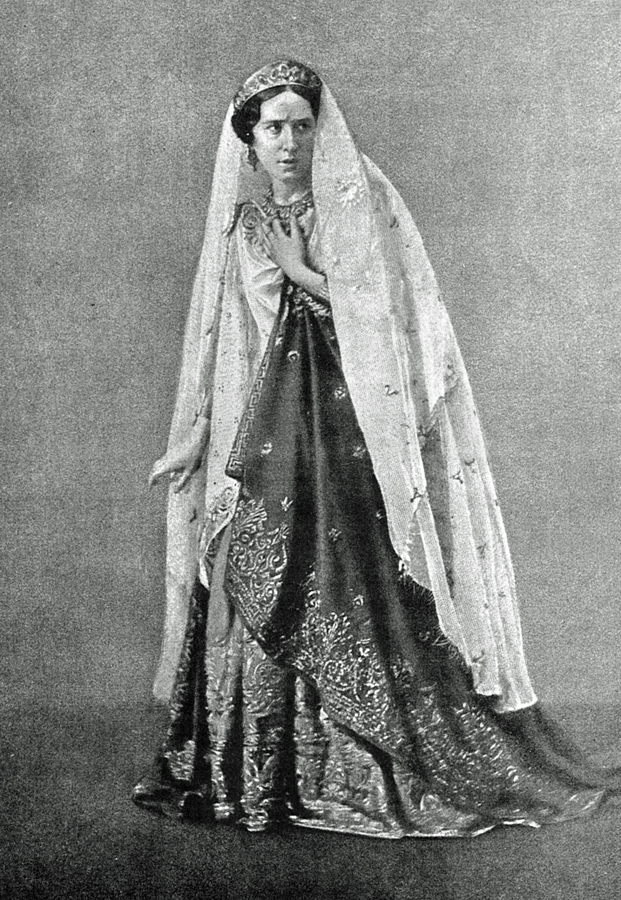
Phèdre, Queen of Athens, and wife of Theseus, is consumed by passion for her husband’s son, Hippolyte. Eli Siegel wrote of Phèdre in “What Opposes Love?” It is some of the greatest literary criticism in the world, and knowledge of urgent necessity for the lives of all men and women. “Phèdre,” he writes,
has been sympathized with for a long time….The anguished depths in her have been given nobility….Yet contempt nestles somewhere amid magnificence and heartbreak.
 There is this line of Racine describing Phèdre: “Un désordre éternel règne dans son esprit“—in Mr. Siegel’s translation: “A disorder, eternal, rules in her mind.” And he writes:
Since in untrue love, what matters to us is the kind of victory we may have over reality by having a person do as we wish, we do not think well of ourselves because of our feeling. Consequently, Phèdre, while despising nearly everything else, despises herself.
One of the things making Rachel’s portrayal of Phèdre great is that she felt, and had the courage to present, the evil in Phèdre, which she had some sense was also in herself. George Henry Lewes described her portrayal this way:
In the second act, where Phèdre declares her passion to Hippolyte, Rachel was transcendent. She subtly contrived to indicate that her passion was…diseased…fiery and irresistible, yet odious to her and to him…. [A]nd such was the amazing variety and compass of her expression that when she quitted the stage she left us quivering with…excitement…. Whoever saw Rachel play Phèdre may be pardoned if he doubt whether he will ever see such acting again.

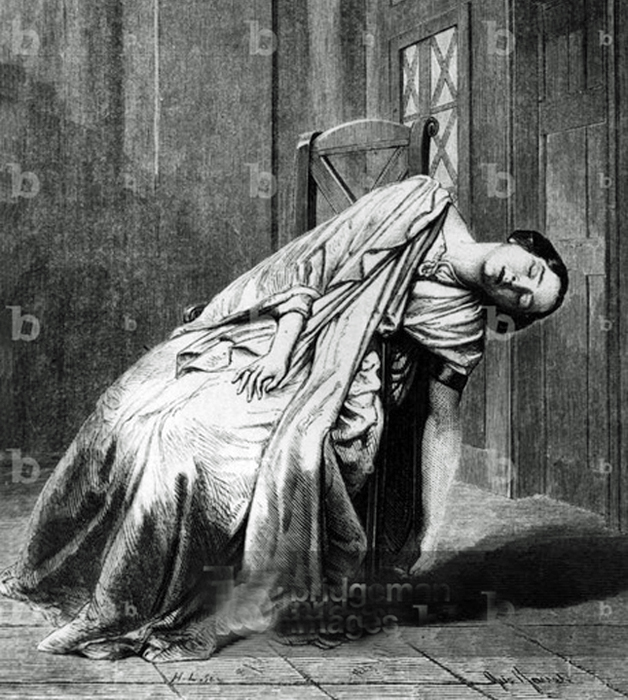
Rachel herself wrote in her copy of Racine, words which have that gratitude and respect which is fulfillment for the self: “Oh my sweet Racine, it is in your masterpieces that I recognize the heart of a woman! I shape my own to your noble poetry.”
In wanting to “shape” her heart to Racine’s “noble poetry” she was looking for that study people are so fortunate to be engaged in now—the Aesthetic Realism study of how our lives can be like art. This is what Katherine Martin is learning, and what every person has the right to know. Not long ago she wrote:
In Aesthetic Realism consultations, I was understood in a way I longed for. Because of what I learned, I stopped living a life as someone else. Someone I didn’t like. And I got a sight of the self I really wanted to be, and got on the road to get there.